

Misconduct in the Broadview 6 Case
An abuse of power in our justice system and the response it met

Last week, I called for the resignation of U.S. Attorney Andrew Boutros, whose actions in the “Broadview Six” case are an egregious example of grand jury tampering to achieve a political end. I’ve been glad to see other leaders join that call.
It’s a clear-cut example of a prosecutor weaponizing the justice system to go after political opponents. And while it was an enormous waste of resources and it monumentally disrupted people’s lives, the effort ultimately failed—and that gives me hope.
Last September, six people — the "Broadview 6" — were among a large group protesting outside an ICE processing center in Broadview, a western suburb, as part of the response to the Trump administration's "Operation Midway Blitz" mass deportation campaign.
On the day in question, and on other occasions, I was at Broadview, supporting our community and exercising my First Amendment rights. The sheer violence protestors received from ICE agents was like nothing else I’ve ever seen. I watched protestors pushed, thrown to the ground, tear gassed and generally brutalized in the name of “keeping order.” I watched as an ICE vehicle, seemingly intentionally, drove directly into the crowd of protesters.
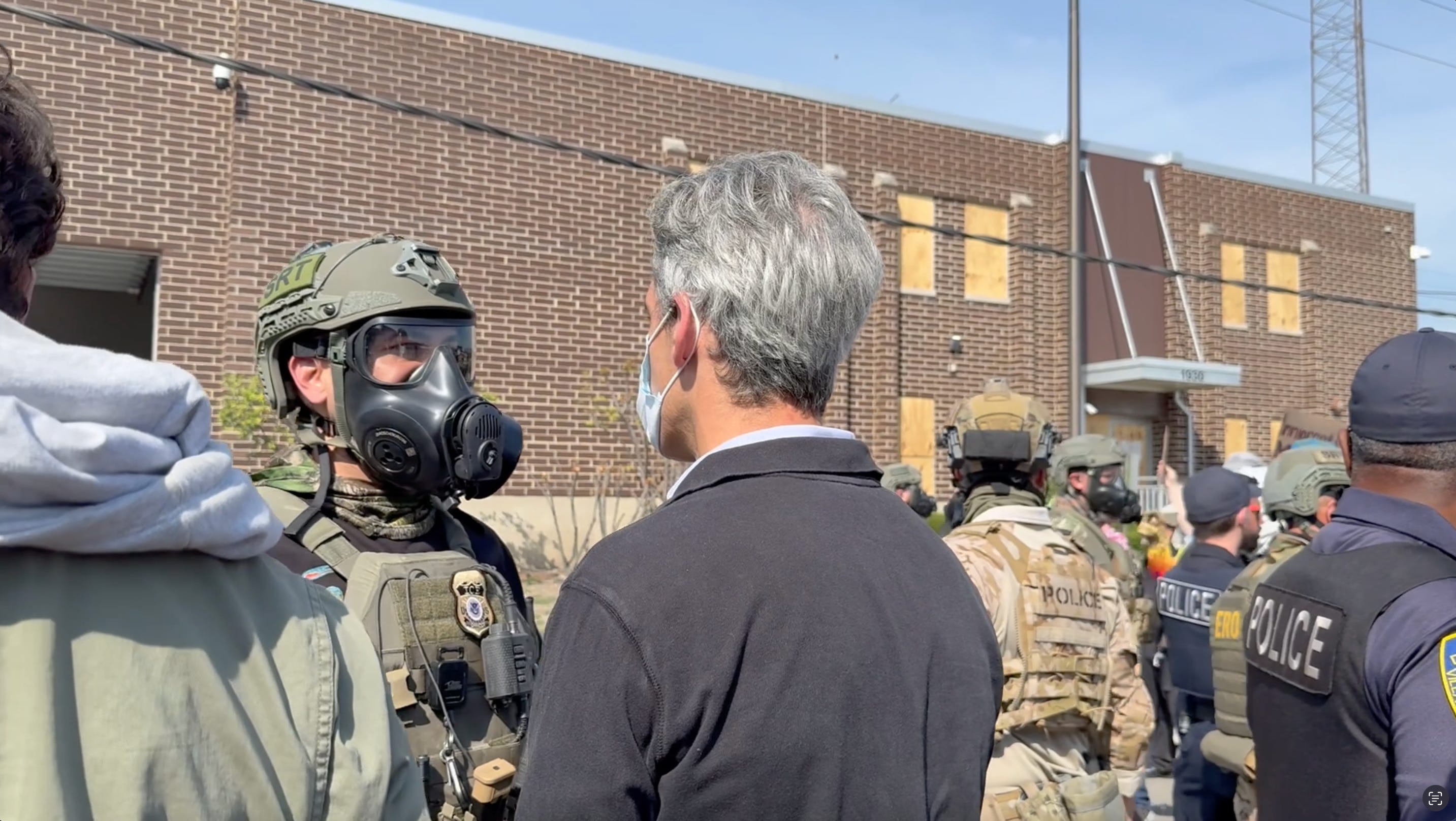
Federal prosecutors went after these six protesters with a felony conspiracy charge, alleging they conspired to "interrupt, hinder, and impede" a federal immigration agent. This was an attempt to criminalize dissent — to take high-profile protesters, and make an example of them. The message the Department of Justice was trying to send was clear: speaking out against the Trump administration is a risk not worth taking.
Fortunately, our justice system is set up in such a way that it’s difficult to go around jailing your political opponents. In order to even get an indictment, a grand jury, a group of ordinary citizens, must decide whether there's enough evidence to formally charge someone with a crime.
Grand juries are meant to be a check on government power — in this case, a buffer between an overzealous partisan prosecutor and ordinary citizens exercising their rights. The prosecutor presents evidence, but the grand jurors are supposed to deliberate independently, free from pressure, and decide on their own whether charges are warranted.
The first time prosecutors presented this evidence, a grand jury refused to indict the protesters. In fact, Chicago grand juries declined to indict at least four other immigration protesters last fall. Citizens, looking at the evidence, kept saying no.
So what did the government do? When the lead prosecutor presented the case a second time, she excused grand jurors who disagreed with the government's case, including one who referred to the case as a “crock of shit.” She asked grand jurors who didn't support the government's case not to come back, and reportedly had improper contact with jurors outside the grand jury room.
Then, on the morning of the third attempt to indict, U.S. Attorney Boutros himself appeared before the grand jury. He gave a threatening speech, asking jurors to raise their hands if they were “struggling with a certain type of cases, such as the immigration cases” explaining that jurors unable to “receive evidence impartially without fear or favor, setting aside personal biases, views, and passions, are a threat to the rule of law” and “extraordinary measures may be required to restore the rule of law.”
Ultimately, because of this egregious misconduct, the case collapsed and charges were dropped. And rightfully so. When a prosecutor keeps re-running a case until they get the answer they want — kicking out the citizens who say no until only "yes" votes remain — that's not justice. It is exactly the kind of thing that happens in authoritarian countries.
This is why I have called for U.S. Attorney Andrew Boutros to resign. I'm not alone. Senators Dick Durbin and Tammy Duckworth have jointly called for his resignation, as well as members of the Illinois congressional delegation including Jan Schakowsky, Delia Ramirez, Mike Quigley, and Chuy Garcia, as well as former Chicago Mayor Lori Lightfoot.
Look at what actually happened here. The government tried to criminalize dissent. They tried to make examples out of people for the crime of protesting. And it backfired. The case fell apart. The misconduct got exposed. Elected leaders are now demanding resignations.
Across the Trump administration, we are watching this pattern repeat. They are spending their time managing scandals, firing people, and walking back overreach — giving them less time to devote to separating families and ratcheting up the cruelty. That is what it looks like when public pressure is working. That is what it looks like when ordinary people refuse to look away.
When this administration is constantly breaking the law, it can grow difficult to call it out in specific detail each time it occurs. But it’s enormously important for elected leaders to say loudly: this person is unfit to serve in government because they are bending and breaking our laws. So here's my ask: don't let this one slide past. Talk about this case at dinner. Forward this to a friend and tell them what happened in Broadview. Say the words out loud: the DOJ tried to rig a grand jury to jail protesters, and they didn’t get away with it.
That's how the pressure stays on. That's how it keeps working.
– Daniel
District court judges appointed this poor excuse for a US Attorney, but lack explicit power to supervise or remove him. When you enter Congress, you should propose legislation to fix that problem. The court only appoints someone when there is vacancy created by the lack of a Senate confirmed presidential nominee. Another approach worth considering is abrogating the temporary appointments statute which has been abused by Trump and replacing it with a statute filling temporary openings with the applicable highest ranking civil servant. Finally, grand juries indict on probable cause whereas DOJ attorneys aren’t supposed to present cases unless they believe the target is guilty beyond a reasonable doubt. This gap in standards is a source of mischief which could and should be closed by statute. You’re a talented legislator, so I hope you take these suggestions to heart.
Agree 100%