

Our Generational Duty
My origin story into politics and the lessons that period taught me

Karin and I celebrated our 20th wedding anniversary this week. We spent a lot of time talking and thinking about the early 2000s. It was a pivotal time for me — it’s when I met my wife, got married, had a child. It’s also when everything shifted for me politically, in terms of how I viewed my own ability — and responsibility — to impact the direction of our country.
2004 was my on-ramp. I was a math teacher, peripherally following politics but not directly involved myself. That May, after John Kerry had wrapped up the nomination, I opened my paper copy of The New Yorker and I read an investigative piece by Seymour Hersh about the torture of prisoners at Abu Ghraib in Iraq. As I read about what our own government was doing in our name, something in me shifted. I wanted to do something, but had no idea where to start.
So I did the thing people did back then: I went to meetup.com to find a way to volunteer.
There’d been a monthly “Kerry for President” meetup chugging along for a year with a handful of people attending, but that spring after he had become the nominee, engagement started to grow. The first event I attended at Goose Island was an absolute madhouse.
To organize all this newfound enthusiasm, the leaders created stations, each table detailing the ways you could get involved. One was about how to give money. One was about throwing a house party to raise money. They were all, basically, about fundraising — and I stood there thinking, this is not for me.
And then there was one station that basically said: here’s how to get on a bus and go knock on doors in a swing state.
That was for me.
By the end of the summer I was helping to lead the operation. Eventually it was thousands of people heading to Wisconsin to knock on doors and make an impact in our neighboring swing states. On the way home, I’d stand in the aisle of the moving bus with my clipboard and give motivational speeches on why this effort mattered. Most importantly, I learned that the next step after having that radicalizing moment where you think, “this is not the country I want to live in,” is to DO something. It’s to act. Not to opine or hand-wring, but jump in, and stay in.
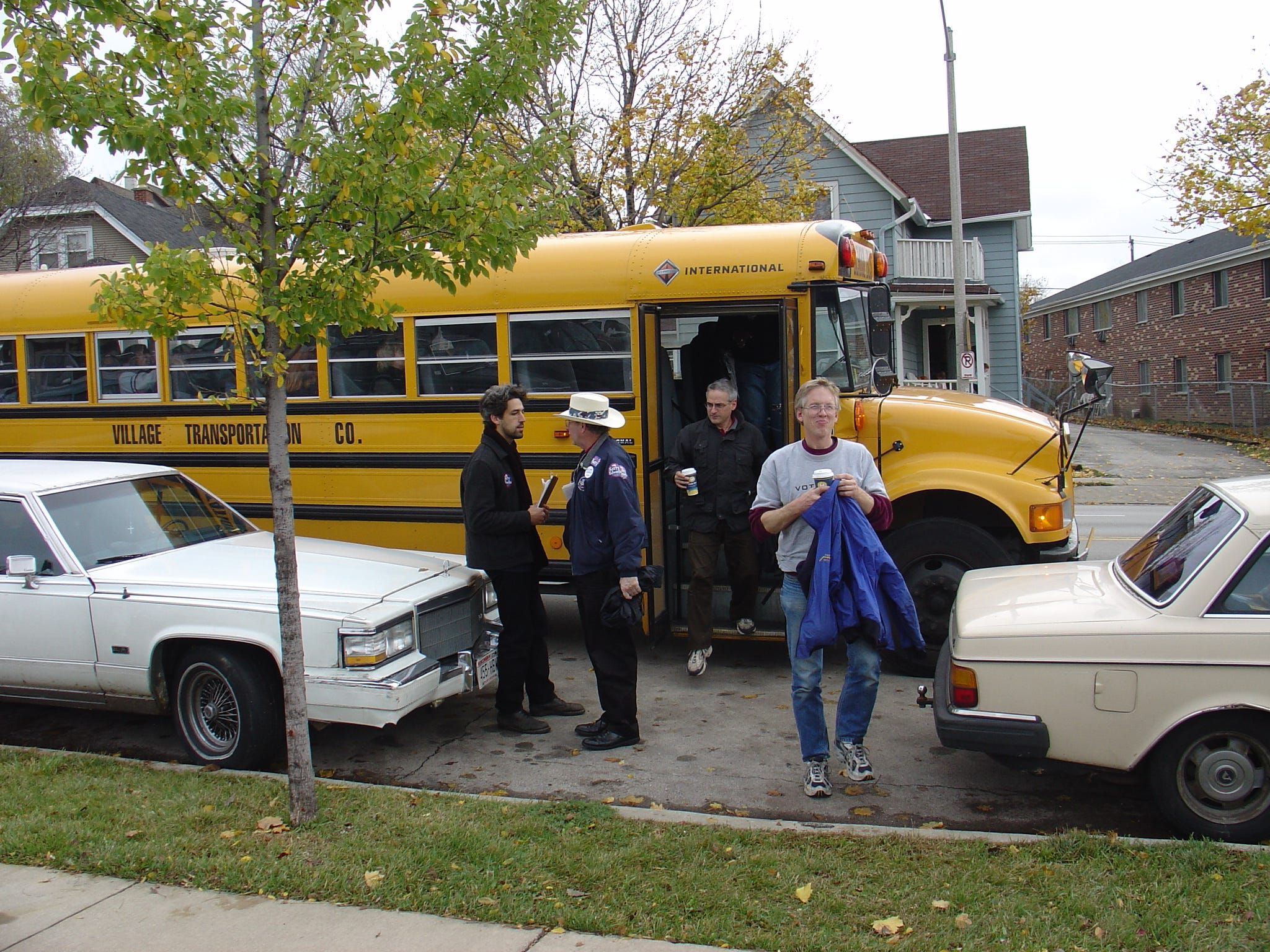
That was the summer I fell in love with organizing. It changed my life, and I watched in real time as it changed other people’s. I went, quickly, from a guy with opinions who figured nothing anyone did made a difference, to being part of a group of people working together to make change. That transformation is the whole reason I’m in this, and it’s why I’m still here.
Today, everything has changed and nothing has changed. We need people organizing. We need people who understand that you cannot look away from the thing you hate and retreat into nihilism. You have to join arms with others and figure out how to raise your voice.
When I watch the response that people are mounting against ICE right now, I recognize it. It’s the same thing. Ordinary people coming together to build power — in solidarity, in community, refusing to be bystanders.
I know the obvious objection, because I feel it too. We lost in 2004, just like we did in 2024. Not only did we lose, but sometimes we start to question if we actually made progress. If we’re standing in roughly the same place we stood in 2004, did any of it work? Some might say we’re still fighting the exact same fights.
The point was never to win the fight forever. That was never an achievable outcome. When I think about this I’m reminded of a quote by Coretta Scott King, “Freedom is never really won forever. You earn it and win it in every generation. That is what we have not taught young people, or older ones for that matter. You do not finally win a state of freedom that is protected forever. It doesn’t work that way.”
There’s a huge gap between two lies — “nothing matters” on one side, and “this one thing will fix everything” on the other. The truth lives in the uncomfortable middle: we are going to keep fighting, forever. Because the moment we win and decide we’re done and move on — that’s when we lose. It’s a generational promise and a generational duty to keep going.
Yes, it is genuinely infuriating that we’re back here. But that’s not a sign that nothing matters. It’s the opposite. If people in 2004 hadn’t stood up and said that’s wrong, we’d be somewhere far worse.
When we lost in 2004, I was devastated. It’s demoralizing to put your all into something, to believe that you’re on the right side of history and that the opposition is dangerous, corrupt and war-hungry. To spend every free moment making the argument and drawing the distinction to every swing voter who will listen — and then to lose.
But then came 2006, and Democrats won, and we won big. We picked up 6 seats in the Senate and 31 seats in the House. We finally had real power to stop the Republican agenda and contain the damage they were doing to this country at home and abroad. Two years later was 2008 and the biggest shift in sentiment towards our political system in decades. Gay marriage was legalized, we passed the Affordable Care Act and other legislation that truly made people’s lives better.
During that time of incredible progress, the people on the other side didn’t stop fighting either — so some of that progress got clawed back. That’s awful, but it’s not a failure that undermines the legitimacy of the good work that came before. That’s the reality of our system.
Society is a long series of hard decisions about how we organize ourselves — about dignity and justice, always and forever. We win sometimes and we lose sometimes. The fact that we’re in hard fights, even some of the same hard fights, doesn’t mean we haven’t won a lot. It means the work is permanent.
So: don’t look away. Don’t retreat into nihilism. Find your station, get on the bus, and keep working.
Join us at operationswingstate.com.
– Daniel
It was during those early “formative“ years of your political career that we met campaigning for Tammy Duckworth. She lost that election but look where you are now!👏👏👏